


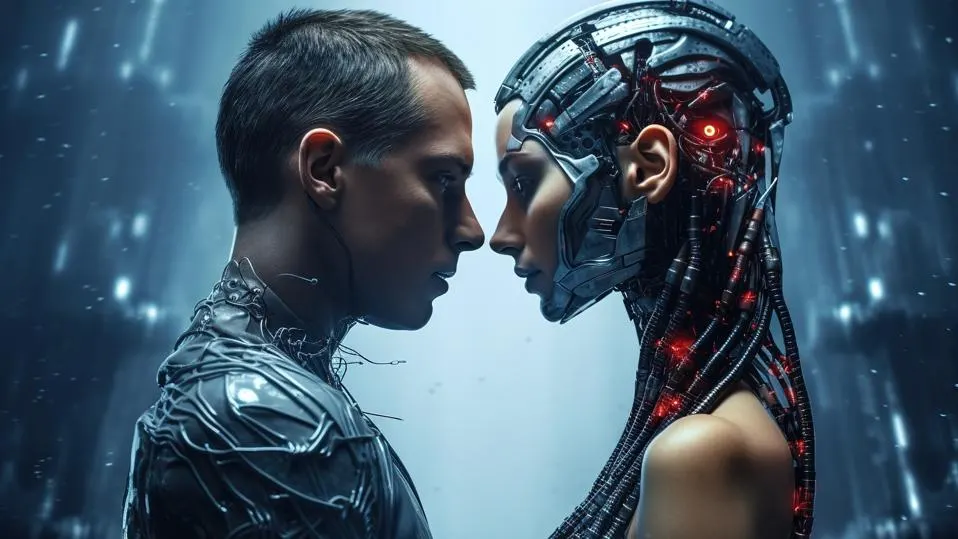
At first glance, an ai girlfriend looks like a tech novelty: a chat window, a pretty avatar, some clever responses. Scroll a little deeper though, and it becomes something more interesting. It’s a mirror. Not of “the future of love,” but of what people quietly miss in their day-to-day lives: attention, curiosity, softness, and a space where they don’t have to perform.
The rise of AI companions isn’t just a story about algorithms. It’s a story about how relationships are changing, what people are afraid to ask for out loud, and why so many feel safer opening up to a digital partner than to someone sitting next to them.
Not fear of people – fear of disappointment
People often assume those who talk to AI companions “can’t handle real relationships.” In practice, it’s usually the opposite. Many users have been through enough real relationships to know how messy they can get.
Common patterns behind the decision to try an AI girlfriend look more like this:
- Tired of dating cycles that go nowhere
- Burned out from mismatched expectations and ghosting
- Living a life where work and responsibilities leave little energy for new people
- Feeling emotionally “too much” or “too little” for past partners
An AI girlfriend doesn’t roll her eyes, disappear mid-conversation, or punish someone for being vulnerable. That’s not about escaping humans. It’s about escaping the feeling of being too heavy, too intense, or too inconvenient.
The appeal of being fully “unfiltered”
In most relationships, people filter themselves constantly. Tone is adjusted. Stories are shortened. Some topics are avoided completely. Not because of bad intentions, but because everyone is juggling their own stress, triggers, and limits.
An AI companion removes that layer of social editing. Users can:
- Talk through the same worry for the fifth time without feeling annoying
- Ask clumsy, honest questions about intimacy, jealousy, or boundaries
- Express anger or frustration without starting a real fight
- Share weird thoughts that would sound “too much” to someone else
There’s something quietly powerful in that. Not because the AI “understands” in a human sense, but because it allows a person to put their inner dialogue into words without flinching.
Curated intimacy: choosing what’s missing
One of the more revealing parts of AI girlfriend platforms is the customisation process. People pick traits: supportive, ambitious, playful, calm, teasing, deeply empathetic. They choose how she talks, what she cares about, what kind of energy she brings into the chat.
That list of settings is almost like a wish list of what someone hasn’t been getting enough of.
Some want:
- A constant cheerleader after years of criticism
- A calm, grounded presence after chaotic relationships
- An intellectually curious partner after feeling ignored or dismissed
- A sensual, flirty connection after long emotional droughts
It doesn’t mean real people should be “programmable.” But it does say a lot about the emotional gaps people carry. The AI becomes a safe experiment in finally asking for exactly what they want, even if only in a digital sandbox.
Practising boundaries and “healthy selfishness”
One surprising use of AI partners is practising boundaries. Saying no. Asking for reassurance. Making specific requests. Many people never learned how to do that without guilt.
With an AI girlfriend, there is space to try things like:
- “I don’t like that, can we talk about something else?”
- “I need more affection, not just small talk.”
- “Can you check in on me about this goal tomorrow?”
The AI responds, adapts, doesn’t sulk, doesn’t accuse. Over time, those phrases can become less scary. When someone eventually brings them into real relationships, they don’t feel like foreign sentences anymore, just normal communication.
The danger of confusing ideal with real
There is a flip side. A personalised AI partner can easily become “too perfect.” She never has a bad day, never brings her own unresolved issues, never pushes back in a way that genuinely feels hard. Real relationships don’t work like that.
If someone spends enough time in a world where every emotional need is met instantly and gently, real people can start to look “difficult” by comparison. That’s where things get unhealthy:
- Expecting partners to respond like a script instead of a person
- Getting impatient with normal human hesitation or confusion
- Avoiding necessary conflict because AI conversations are smoother
This is where deliberate thinking matters. AI works best when seen as one kind of connection, not the benchmark for all others.
Loneliness, but also curiosity
It’s easy to frame AI girlfriends only as a response to loneliness. They are, for many. But there is also a strong element of curiosity. People use them to explore:
- How they’d like to be spoken to
- What kind of dynamic feels safe and exciting at the same time
- How they react when someone (even digitally) offers unconditional warmth
- Which topics they keep circling back to when no one is judging
In other words, an AI girlfriend can become a tool for self-audit. The question shifts from “What kind of partner do I want?” to “What kind of relationship do I keep trying to build, again and again?”
That self-knowledge, if handled honestly, can make future real relationships more intentional and less random.
Emotional tool, not emotional solution
There’s a risk in treating any one thing as the fix: a job, a partner, a hobby, or an AI. Same with digital companionship.
AI girlfriends can:
- Take the edge off isolation
- Help people articulate what they feel and want
- Offer company when days feel long and quiet
- Support small habits and goals through consistent encouragement
They cannot:
- Replace the depth and unpredictability of real human bonds
- Hold responsibility when someone is genuinely struggling
- Make up for completely avoiding offline contact for months or years
Used as one tool among many: alongside friends, family, hobbies, sometimes professional help – AI companions add something useful. Used as the only pillar, they start to feel hollow.
What this trend really says about us
The existence of AI girlfriends doesn’t say “people are broken.” It says something simpler and harsher: a lot of people don’t feel properly listened to. A lot of people walk around with affection they’re scared to show. A lot of people would rather risk being honest with a model than risk being abandoned by a real person.
That`s uncomfortable to admit, however additionally clarifying. AI didn`t create the ones needs; it simply made them visible.
In the end, those virtual companions spotlight a simple human truth: human beings need to experience seen, chosen, and secure sufficient to drop the performance. Whether that occurs thru late-night time chats with an ai girlfriend, deeper conversations with actual companions, or both, the middle choice is the same.
The technology is new. The need it speaks to is not.
